Leadership • Language • Justice • Purpose

Haitian Creole Legal Language Specialist, storyteller, and community builder helping you communicate clearly, lead confidently, and create meaningful impact.

Category: Uncategorized

  • Leadership lessons from Dale Carnegie’s How to win friends and influence people

    I just reread this classic book: How to Win Friends and Influence People.  Once again, this is a great leadership learning moment for me with Dale Carnegie who wrote this book in 1936.

    This is a very easy reread for me. I just go over my underlines and each chapter has a resume at the end. Let me share with you some highlights from this classic that I invite you to read yourself.

    The book has six major sections. The core principles of each section are quoted below.

    Fundamental Techniques in Handling People

    1. Don’t criticize, condemn, or complain.
    2. Give honest and sincere appreciation.
    3. Arouse in the other person an eager want.
    4. never show others that you are not interested in what they want say.

    Six Ways to Make People Like You

    1. Become genuinely interested in other people.
    2. Smile.
    3. Remember that a person’s name is, to that person, the sweetest and most important sound in any language.
    4. Be a good listener. Encourage others to talk about themselves.
    5. Talk in terms of the other person’s interest.
    6. Make the other person feel important – and do it sincerely.

    Twelve Ways to Win People to Your Way of Thinking

    1. The only way to get the best of an argument is to avoid it.
    2. Show respect for the other person’s opinions. Never say “You’re Wrong.”
    3. If you’re wrong, admit it quickly and emphatically.
    4. Begin in a friendly way.
    5. Start with questions to which the other person will answer yes.
    6. Let the other person do a great deal of the talking.
    7. Let the other person feel the idea is his or hers.
    8. Try honestly to see things from the other person’s point of view.
    9. Be sympathetic with the other person’s ideas and desires.
    10. Appeal to the nobler motives.
    11. Dramatize your ideas.
    12. Throw down a challenge.

    Be a Leader: How to Change People Without Giving Offense or Arousing Resentment

    1. Begin with praise and honest appreciation.
    2. Call attention to people’s mistakes indirectly.
    3. Talk about your own mistakes before criticizing the other person.
    4. Ask questions instead of giving direct orders.
    5. Let the other person save face.
    6. Praise every improvement.
    7. Give the other person a fine reputation to live up to.
    8. Use encouragement. Make the fault seem easy to correct.
    9. Make the other person happy about doing what you suggest.

    I am working to adapt this classic book in Creole   (among others) and share its content through a LEADERSHIP tour in Haiti.

    Have you read this book? Please,  share your thoughts with us.

    http://www.rooseveltjeanfrancois.com

    twitter@rooseveltjf

  • Leadership global et Culture locale!

    Je suis entrain de lire un texte de Bill George, auteur, professeur de management à  la Harvard Business School, qui me pousse  à réfléchir sur une  nouvelle ère d’éducation au leadership à un moment où les entreprises globales -ci-devant les multinationales- cherchent à s’étendre dans de nouveaux marchés émergents qui sont beaucoup plus profitables tenant compte du ralentissement de l’économie dans les pays développés.
    La globalisation amène de nouveaux défis. Elle crée de  nouvelles réalités qui offrent de nouvelles opportunités pour ceux qui s’offrent comme champs d’étude et d’occupation l’éducation au leadership global.
    Bill George, ex CEO de Medtronic, propose une nouvelle approche pour le développement des leaders à un moment de transition des multinationales vers des organisations véritablement mondiales en s’appuyant sur les marchés émergents à la croissance.
    Il faut s’adapter aux cultures locales et répondre aux  besoins réels du marché. Il faut passer de  la décentralisation à la  prise de décision collaborative. Cela nécessite le développement de nombreux dirigeants, qui sont des leaders globaux  capables de travailler n’importe où.
    Les leaders au haut de l’échelle doivent refléter la diversité de la communauté desservie par l’organisation. Il faut développer  des centaines, voire des milliers de leaders globaux  avec des sensibilités culturelles et des capacités de de collaboration tout en mettant  beaucoup plus d’accent sur l’intelligence émotionnelle, la confiance en  soi et l’autonomie que sur les compétences traditionnelles de gestion.
    Il faut organiser la force de travail et de décision autour de la vision, la mission et les valeurs de l’entreprise. Il faut surtout une collaboration horizontale dans laquelle  tout un chacun est partie prenante et offre des idées pour satisfaire au mieux la communauté.
    Parallèlement, les leaders locaux doivent s’ouvrir à la culture et à l’éducation au leadership. Ceci peut amer à des tensions qui exigent le dépassement des valeurs traditionnels en cours dans la communauté.
    Une méthode pour arriver à un juste milieu entre le global et le local est l’apprentissage continu et le partage de savoir et d’expériences. Ce partage peut se faire à travers des livres, des blogs, des espaces de discussions.
    Des entreprises commerciales, des organisations socio-politiques qui, dans le temps, concentraient leurs investissements de développement des cadres et des leaders au sommet de la hiérarchie, s’ouvrent aujourd’hui vers une base plus large en intégrant un plus grand nombre de leaders dans la formation continue au leadership.
    Ces programmes permettent à l’équipe dirigeante d’avoir accès  aux mêmes livres, aux mêmes conférences, de les lire et de participer  au même moment. Ce qui crée un esprit de collaboration plus large et une capacité plus profonde pour la créativité et la performance.
    Ces méthodes de développement des leaders mondiaux pour l’avenir sont encore dans leur phase naissante, mais il ya peu de doute qu’ils auront un impact profond sur le développement des leaders mondiaux dans les années à venir.
  • Power and Leadership!

    I just read a post on Power and leadership from my classmate friend blogger Cassandra Honorat.  I may not agree with her on several key points on leadership but I’m glad to share her post with you.

    Just note her lead is Power or Leadership with a question mark.  But mine is Power and leadership with an exclamation mark.

    I do think one can not be without the other. Power and leadership are intertwined. Former US Senator  Joseph Nye is a good source on power and leadership in global affairs. He defines the concepts of hard power and soft power.

     Let’s read her post.

     Power or Leadership?

    Susan Ward defines leadership as: ” the art of motivating a group of people to act towards achieving a common goal”.  This is certainly a concise, precise and to the point approach of a concept which has been debated throughout our recorded human history.  Our aim here is neither to redefine nor discuss the meaning of Leadership rather than it is to underline the differences that exist between that concept and the one of Power and how confusing both has hurt Haiti tremendously.

    If we go back for a minute to Susan Ward’s definition, the responsibility of the individual who aspires to lead rests in his/her ability to direct others.  Therefore it would be fair to add that those who are meant to be led determine whether or not the leader is successful.  If the common goal isn’t reached and if people are not motivated to work toward that said objective, then the leader has failed.  On the other hand, those who have power don’t depend on those they rule or direct to succeed.  They depend on the tools available (legal system, army, money) and on their ability to use those tools effectively to get what they want.

    What is Power? The dictionary offers an array of definitions depending on the context.  We’ve retained three:

    1. The ability or capacity to perform or act effectively.                                               

    2The ability or official capacity to exercise control; authority.                                      

       3A person, group, or nation having great influence or control over others.

    Power! When limited to the political realm, it simply means having within the hands of the individual, social class or political party the legal means to exert authority over the rest of society.  Those who run for office usually do so in order to gain power but, in order to succeed, they must possess those qualities needed to become a good leader.  One who has leadership qualities will sooner or later gain power; however, most who have power don’t necessarily lead because they are too concerned with controlling.  Throughout human history, the less fortunate, who happen to be in greater numbers, have been kept in line because of power and because of a realistic fear of what it can do.  There have been times when leadership was born out of grave injustices to right the wrongs of our world.

    Having just spent 16 days in Haiti, one cannot help but ponder those two concepts.  Before the magnitude of the work to be done, one has to ask whether or not our collective illness isn’t simply due to a terrible deficiency in quality leadership.  Oh, there is plenty amount of power in Haiti and countless numbers of Haitians who vie to hold it for as long as they can and by all means necessary.  Since 1804, and because of national and international conspiracies, the Haitian people has not been properly led.  We’ve had our fair share of powerful and authoritarian heads of state.  A small group of families, whose interests do not align with those of the rest of society, has been very successful at holding and keeping power and all means of production; they have yet to lead a society desperate to find itself.

    There is an infrastructure that needs rebuilding and modernizing, construction codes to be updated, an educational system in desperate need of restructuring, jobs to be created, a legal system that needs a facelift and our collective dignity to be regained.  Power only begets more power and it has the uncanny ability to quickly corrupt the foolish.  But honest and effective leadership begets true vision and wisdom to lead a people onto the path of human progress.  Haiti today needs builders of nation and makers of dreams to rise once more out of the ashes of destruction.  Two fundamental questions remain:  Can a society that is deep in crisis recognize those qualities that make a good leader?  Is Haiti forever condemned to having as heads of state those power seeking individuals who never concern themselves with leading?  The answers, I leave to you.

    Cassandra Honorat


  • Leadership education and the pursuit of happiness!

    Let’s start with a simple question: what is the purpose of the study of leadership? Why leadership education matters? A simple answer  to this question is happiness. Yes, the real purpose of the study of leadership is to discover happiness by influencing others in a positive direction. The result of applying principles based-leadership in your life is happiness.

    I’m sitting home and I’m happy. My son Jonathan just told me he listened to 4 leadership CD’s for the last two days. He told me what he learned from leaders like Claude Hamilton, Mark Hass, Mark & Jen Paul -top leaders from the Life Leadership Business- about fitness, relationships and making a difference in life.

    He just earned 20 dollars. This is the way I compensate my three kids to earn money by being a consumer of leadership education. They  earn  5$ to listen to a leadership/ life CD, $ 10 to read a leadership book; and more to post their own thoughts on their own  blog. I’m happy to connect them to great ideas and to teach them to create their own content and to be part of the leadership revolution.

    I was in Columbus, Ohio, last week-end for the the  Winter Leadership Convention. I had an opportunity to listen to a presentation from blogger and Life business co-founder Georges Guzardo about the purpose of the study of leadership.

    Guzardo said that if “you take leadership qualities and you apply them in your life, the result is happiness in your life”.

    He asked the audience to jot down 5 qualities of a leader. I will ask you the same question. Take a moment, grab a pen and a piece of paper and write down 5 qualities you think of a leader.

    I’m pretty sure each and every one of us could come with a different set of qualities. For me, the  5 top qualities were the following:

    1.- Character

    2.- Vision

    3.- Responsibility

    4.- Commitment

    5.- Trust

    I know yours will be different from mine. But, can you apply any of these qualities in your family, business, marriage, friendship, community, church, team etc. If you take some of these qualities and you apply them to your marriage, you will have a successful relationship. And what’s the result of a successful marriage: happiness. Happy wife, happy life. Happy spouse, happy house.

    the main product of leadership education is one and foremost happiness. Leaders make people happy by influencing them in the right direction.

    The most important component of learning is doing. There are two ways of learning: instructing and discovering. The best instructor teaches how to discover and the true discovering is wisdom, Guzardo said.

    Instructing leads to a vocational career to earn a living. Discovering leads to a classical liberal education which prepares for LIFE. When we say you are a student of leadership, we mean you allow yourself to have self-discovery, you develop a learning culture, you absorb history and global studies.

    Roman philosopher Cicero said historical leadership is the teacher of LIFE.  Historian Carlyle penned that all  is a variety of study of recorded human history.In ancient times, when the Greeks had free times in the afternoon, they met, and called it agora, which is what we call today school. The agora was to generate ideas.

     The best way to access to history and global studies is through reading. Reading helps us to gather information. New information inspires us for hope, life. Then, from inspiration we develop groups of thinkers who create ideas. Ideas lead to innovation and creation. Innovation transforms and creates commerce and prosperity.

    Innovation and Commerce travel hands in hands. They create opportunities and prosperity which change living conditions, said Guzardo.

    At the end, the result of prosperity is happiness. But, it starts with leadership education, self-discovering, reading, thinking.

    It starts with you!

    http://www.rooseveltjeanfrancois.com

  • 2011 in review

    The WordPress.com stats helper monkeys prepared a 2011 annual report for this blog.

    Here’s an excerpt:

    A New York City subway train holds 1,200 people. This blog was viewed about 4,700 times in 2011. If it were a NYC subway train, it would take about 4 trips to carry that many people.

    Click here to see the complete report.

  • Living a Life that counts!

    I read the editorial of Haitian journalist Frantz Duval Living Life (Vivre la Vie). I like reading Duval and he’s definitely my favorite Haitian journalist for these days.

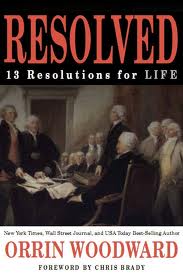
    But, I am also reading the 7th leadership guru Orrin Woodward recent book Resolved: 13 resolutions for life. This helps me put into perspective Duval’s edito. And it’s not enough to just live life. You and I need to live a life that counts.

    Leadership expert John Maxwell quoted Ben Franklin who  once wrote, “I would rather have it said ‘he lived usefully’ than ‘he died rich.’” More than just words, it was the way Franklin lived his life. One example of his useful nature was the invention of the Franklin stove. Instead of patenting it and keeping it to himself, Ben Franklin decided to share his invention with the world.

    According to Dr. John C. Van Horne, Library Company of Philadelphia: “Franklin’s philanthropy was of a collective nature. His sense of benevolence came by aiding his fellow human beings and by doing good to society. In fact, in one sense, Franklin’s philanthropy, his sense of benevolence, was his religion. Doing good to mankind was, in his understanding, divine.” Even his position as a printer fit this philosophical bent. He did not hoard his ideas, but shared them, and everyone benefited. He had an “abundance mentality.”

    Maxwell also reported that instead of seeing the world in terms of how much money he could make, Franklin saw the world in terms of how many people he could help. To Benjamin Franklin, being useful was its own reward.

    Maxwell talked on his  perspective on the illusion of wealth and status as forms of fulfillment.

    “I don’t want my life to be measured by dollars and cents, or the number of books I’ve authored. Rather, I want to be remembered by the lives that I’ve touched. I want live a life that counts”, said John Maxwell who is a leadership bestselling author.

    With each day that passes, we should  feel a greater sense of urgency to make sure our time and energy are invested in developing leaders and others to live a life that counts.

    http://www.rooseveltjeanfrancois.com

  • Change, gourde, dollar: un moment de discussion sur l’argent

    Je suis à l’aéroport de Port-au-Prince en route pour la Floride ce dimanche matin. Je viens de passer mon troisième arrêt de fouille à la salle du départ de American Airlines.

    Comme d’habitude, j’aime prendre une pause café en attendant l’embarquement. Rébo ou Starbucks. REBO Expresso, si je suis à Port-au-Prince. Starbucks Frappucino, si je suis en dehors d’Haïti.

    Je suis à la mezzanine chez Rébo. Je commande un café. La caissière me dit U$ 2.50 ou 102.50  gourdes.

    Je décide de payer en gourdes. Je tire un billet de mille gourdes frappé à l’effigie de Florvil Hyppolite et du panorama du marché en fer de Port-au-Prince.

    Elle actionne son tiroir caisse et me rend: 850 gourdes et 3 pièces de 25 centimes (1 quarter U$). Je lui ai demandé de m’expliquer ce change et pourquoi ces 75 centimes.

    “Monsieur, je n’ai pas de monnaie en Haïtien. Donc, je te donne du U$ au taux du jour », me dit-elle.

    « Pas de problème », lui ai-je répondu ajoutant que « j’apprécierais que tu m’expliques  ton calcul ».

    Elle me regarde et me dit que chaque pièce de 25 centimes U$ fait 10 gourdes et le total est bien mon change.

    A ceci, je commence à raisonner ayant à l’esprit la règle de trois. « Si 25 centimes font 10 gourdes, US 2.50 font 100 gourdes ».

    « Non, monsieur, notre taux est à 41,50 gourdes », déclare-t-elle. Ton café fait 102.50 gourdes.

    Entretemps, l’odeur du café monte. Je prends un petit sip… Et la file s’allonge en arrière de moi.

    Finalement, elle a ajouté deux autres pièces de 10 centimes U$ avant de me dire « maintenant c’est ok ».

    Je lui ai remercié pour sa patience et me suis déplacé avec précaution pour ne pas jeter mon café.

  • Leadership & Attitude: A talk inspired from the book Resolved of Orrin Woodward

    I am sharing with you some thoughts I got from the book Resolved, just released by 7th leadership guru and wall Street best selling author Orrin Woodward.

    With the release of  this  new book RESOLVED: 13 Resolutions For LIFE,Orrin Woodward has  been eagerly anticipating the reaction of leaders around the globe.

    Writing a book is an arduous task. It  requires  many thankless hours of time alone to think and write a labor of love. 

      However, when it’s released, it’s part of the global networth to inspire others beyond time and space.

    This is a poadcast for my radio show on attitude.  yo.aspx?cardid=V4b2MLgfhF6gYIor8fQp3B     I invite you to listen and to share your comments in this blog.

    Leadership is about sharing and growing. I invite you to have this book to grow yourself personnally. http://www.yodio.com/yo.aspx?cardid=V4b2MLgfhF6gYIor8fQp3B

    Leave me a message and I will have you get this book. Then we may have a special conference call to discuss it. We need to grow together. Iron sharpens iron. Let’s build a leadership matermind group to build our communities, our homes, our families, and our countries.

    www.rooseveltjeanfrancois.com

  • Team Leader Orrin Woodward: Top Leadership Award 2011 from the International Association of Business

    I’m proud to be part of Orrin Woodward’s leadership team. I mentioned his ideas several times on my book http://www.leadershipsurlevif.com.

    .The leadership results are in. 2012 is starting off with a bang for Orrin Woodward and his community. Mr. Woodward was just awarded one of the top leadership awards in the world for 2011. The Top 10 finalist competing for the award is a veritable “Who’s Who” list in the field of leadership. The IAB, using numerous criteria to separate the contenders, awarded Orrin as its Top Leader for 2011! Here are the background details on this coveted award:

    Who is the International Association of Business (IAB)?

    The IAB is a million plus member nonprofit organization, helping American small businesses start, grow and effectively create jobs in the US. President Shane Madigan shares the vision of the IAB:

    “This is the dawn of a new generation in America. It is a time of tremendous growth, innovation and communication of American entrepreneurs and the Association. For nearly three decades, IAB has created and navigated innovative solutions that provide basic protections for small business owners, the self employed and their families. The innovation, vision and leadership of our founder, Mr. James C. Wood, is unprecedented. Mr. Wood has redefined innovation in the Association industry. IAB remains a center of education and access to membership benefits that helps independent business owners and the self employed prosper with abundance in this new age of entrepreneurship.”

    What is the IAB Leadership Award?

    As part of this innovation, the IAB presents its Small Business Awards, recognizing and awarding businesses who achieve both qualitative and quantitative results in their organization. There are ten separate awards presented each year with the Leadership Award being the highest reconition given among the 10 categories.

    What is the criteria for receiving the Leadership Award?

    According to the IAB site, the Leadership Award, “. . . applies to ones own leadership principles and how they help develop and influence successful leaders throughout American businesses. The criteria for the IAB Awards winners includes:

    – Originality of ideas

    – Practicality of ideas

    – Presentation style

    – Testimonials

    – Impact of ideas

    – Quality of web content, publications and writings

    – Ranking of website in America”

    Who were the contenders for the 2011 Leadership Award?

    http://www.jimcollins.com : Jim Collins

    http://www.giantimpact.com : John Maxwell

    http://www.stephencovey.com : Stephen Covey

    http://www.kenblanchard.com : Ken Blanchard

    http://www.robinsharma.com : Robin Sharma

    http://www.marshallgoldsmith.com : Marshall Goldsmith

    http://www.tompeters.com : Tom Peters

    http://www.tonyrobbins.com : Anthony Robbins

    http://www.straightfromthegut.com : Jack Welch

    http://www.orrinwoodward.com : Orrin Woodward

    Who is the 2011 Top Leadership Award Winner?

    Although everyone of the Top 10 finalists is a winner, only one can receive the prize. The 2011 Top Leadership Award was presented to Orrin Woodward – Founder of two multi-million dollar leadership companies – LIFE and TEAM.

    Orrin is a New York Times Best-Selling Co-Author of Launching a Leadership Revolution, Top Leadership Blogger, and recognized Leadership Guru. His first solo book RESOLVED: 13 Resolutions For LIFE was released in 2011 and is achieving international acclaim for its character-centered leadership resolutons.

    Congratulations to Orrin Woodward and his entire leadership team for raising the bar in the field of leadership!