Leadership • Language • Justice • Purpose

Haitian Creole Legal Language Specialist, storyteller, and community builder helping you communicate clearly, lead confidently, and create meaningful impact.

Tag: Economy

  • Leadership education and the pursuit of happiness!

    Let’s start with a simple question: what is the purpose of the study of leadership? Why leadership education matters? A simple answer  to this question is happiness. Yes, the real purpose of the study of leadership is to discover happiness by influencing others in a positive direction. The result of applying principles based-leadership in your life is happiness.

    I’m sitting home and I’m happy. My son Jonathan just told me he listened to 4 leadership CD’s for the last two days. He told me what he learned from leaders like Claude Hamilton, Mark Hass, Mark & Jen Paul -top leaders from the Life Leadership Business- about fitness, relationships and making a difference in life.

    He just earned 20 dollars. This is the way I compensate my three kids to earn money by being a consumer of leadership education. They  earn  5$ to listen to a leadership/ life CD, $ 10 to read a leadership book; and more to post their own thoughts on their own  blog. I’m happy to connect them to great ideas and to teach them to create their own content and to be part of the leadership revolution.

    I was in Columbus, Ohio, last week-end for the the  Winter Leadership Convention. I had an opportunity to listen to a presentation from blogger and Life business co-founder Georges Guzardo about the purpose of the study of leadership.

    Guzardo said that if “you take leadership qualities and you apply them in your life, the result is happiness in your life”.

    He asked the audience to jot down 5 qualities of a leader. I will ask you the same question. Take a moment, grab a pen and a piece of paper and write down 5 qualities you think of a leader.

    I’m pretty sure each and every one of us could come with a different set of qualities. For me, the  5 top qualities were the following:

    1.- Character

    2.- Vision

    3.- Responsibility

    4.- Commitment

    5.- Trust

    I know yours will be different from mine. But, can you apply any of these qualities in your family, business, marriage, friendship, community, church, team etc. If you take some of these qualities and you apply them to your marriage, you will have a successful relationship. And what’s the result of a successful marriage: happiness. Happy wife, happy life. Happy spouse, happy house.

    the main product of leadership education is one and foremost happiness. Leaders make people happy by influencing them in the right direction.

    The most important component of learning is doing. There are two ways of learning: instructing and discovering. The best instructor teaches how to discover and the true discovering is wisdom, Guzardo said.

    Instructing leads to a vocational career to earn a living. Discovering leads to a classical liberal education which prepares for LIFE. When we say you are a student of leadership, we mean you allow yourself to have self-discovery, you develop a learning culture, you absorb history and global studies.

    Roman philosopher Cicero said historical leadership is the teacher of LIFE.  Historian Carlyle penned that all  is a variety of study of recorded human history.In ancient times, when the Greeks had free times in the afternoon, they met, and called it agora, which is what we call today school. The agora was to generate ideas.

     The best way to access to history and global studies is through reading. Reading helps us to gather information. New information inspires us for hope, life. Then, from inspiration we develop groups of thinkers who create ideas. Ideas lead to innovation and creation. Innovation transforms and creates commerce and prosperity.

    Innovation and Commerce travel hands in hands. They create opportunities and prosperity which change living conditions, said Guzardo.

    At the end, the result of prosperity is happiness. But, it starts with leadership education, self-discovering, reading, thinking.

    It starts with you!
    http://www.rooseveltjeanfrancois.com

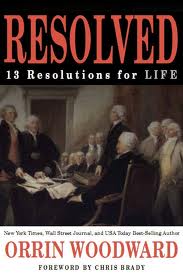
  • Leadership & Attitude: A talk inspired from the book Resolved of Orrin Woodward

    I am sharing with you some thoughts I got from the book Resolved, just released by 7th leadership guru and wall Street best selling author Orrin Woodward.

    With the release of  this  new book RESOLVED: 13 Resolutions For LIFE,Orrin Woodward has  been eagerly anticipating the reaction of leaders around the globe.

    Writing a book is an arduous task. It  requires  many thankless hours of time alone to think and write a labor of love. 

      However, when it’s released, it’s part of the global networth to inspire others beyond time and space.

    This is a poadcast for my radio show on attitude.  yo.aspx?cardid=V4b2MLgfhF6gYIor8fQp3B     I invite you to listen and to share your comments in this blog.

    Leadership is about sharing and growing. I invite you to have this book to grow yourself personnally. http://www.yodio.com/yo.aspx?cardid=V4b2MLgfhF6gYIor8fQp3B

    Leave me a message and I will have you get this book. Then we may have a special conference call to discuss it. We need to grow together. Iron sharpens iron. Let’s build a leadership matermind group to build our communities, our homes, our families, and our countries.

    www.rooseveltjeanfrancois.com

  • A conversation with Anis Blemur on his new book: A balanced LIFE

    Haitian-US Business Entrepreneur Anis Blémur just released his first book entitled A Balanced Life: How to Achieve Success in Every Area of Your Life. He turns his mess into his message. I have a conversation with him regarding his book.

    BizNews Poadcast with Anis Blemur

  • Leadership Clinton: “back to work”.

    I just read Bill Clinton’s recent book entitled: “Back to work: Why we need smart government for a strong economy”.
    This is an easy read featuring Bill Clinton’s ideas to turn America to the business of business, as Truman stated.
    He said a strong government working hand in hand with a strong private sector will lead to economic growth and jobs creation.
    Clinton, globe trotter in chief, invites Americans to “take off the blinders of antigovernment ideology and focus on what role government must play in America renewal”.
    America was built by people who were idealists but not ideological, Clinton wrote. Idealists are open to evidence while ideologists make evidence,experience and argument irrelevant.
    Clinton thinks the role of the government is to “give people tools and to create conditions to make the most out of their lives”.
    Those tools and conditions include: national security, assistance, opportunity, economic development;
    Clinton also wrote about the US debt crisis. He apologized himself to have left office with a balanced budget and a surplus.
    When he took office in 1993, the debt was 49% GDP (Gross Domestic Product). By 2001, the debt has dropped to 33% GDP, and was projected to be eliminated completely by 2013.
    Contrarily to those who plead in favor of cutting foreign aid to balance the budget, Bill Clinton said foreign aid is less than 1% of the US budget.
    He also pointed out “too much of the money appropriated for foreign assistance, sometimes 50%, never reaches the nations or the people it’s designed to help, largely because it is channeled through US contractors who took a lot of it off the top for overheads and administration costs both in the US and the affected economy”.
    Clinton’s prescription is to put America in the future .
    He detailed his plan  how to do that and to  put ” a lot of people to work now”:
    1.- Put as much of $ 4 trillion now held in the banks and corporate treasuries back into the economy as fast as we can;
    2.- concentrate on areas most likely to create good jobs;
    3.- pass Obama’s jobs act $ 250 billion in payroll tax;
    4.- end the mortgage mess as quickly as possible;
    5.- let people with government guaranteed mortgages who aren’t delinquent refinance their mortgages at the current low interest rate;
    6.- the Federal Reserve should give banks an incentive to lend money;
    7.- give corporations incentives to bring more money back to the U.S.;
    8.- let companies repatriate the cash now with no tax liability it it’s reinvested to create new jobs;
    9.- build a 21st century infrastructure;
    10.- speed up the process for approving and completing infrastructure projects;
    11.- launch an aggressive fifty state building retrofit energy initiative;
    12.- states and localities should have their own retrofit energy initiative;
    13.- get pension funds involved in investments:
    14.- paint the roof to reduce energy consumption;
    15.- re-instate the full tax credit for green technology jobs

    As I said, I read Clinton’s book in a few hours. It’s very informative, technically driven, and economically results oriented. Which is good. But, it lacks some deep thoughts on leadership and philosophical issues on why we are here, and why America and global institutions are in decay morally. Which could have been great.

    My next book will be Jim Collins’s “The choice to be great”.

    Roosevelt Jean-Francois
    Roosevelt Jean-Francois is a Business Radio/TV host, Fulbright Research Scholar, and the best selling author of Leadership sur le Vif. He teaches, consults, writes on global leadership issues.

  • Peru and Bolivia have the best environments for microfinance in global ranking

    Peru ranks first followed by Bolivia, Pakistan and Kenya, according to the 2011 ranking, which compares the microfinance sector in countries and regions across two broad categories—Regulatory Framework and Practices and the Supporting Institutional Framework. These are complemented by an adjustment factor for political shocks and stability.

    The strong results for Latin America have been driven by high scores on elements that enable the microfinance business, particularly the existence of credit bureau infrastructures that are relatively well established in the region.

    Other Latin American countries that made into the top dozen include: El Salvador, Colombia, Ecuador, Mexico, Panama and Paraguay. Mexico and Brazil, Latin America’s biggest economies, made important strides in improving the environment for microfinance businesses with both countries now ranked among the top 15 performers.

    The report notes that, as a group, Latin American countries perform less well on the Regulatory Framework and Practices, although top performers—Bolivia and Peru—joined by El Salvador, Ecuador and Panama, hold their own in the overall rankings, placing them in the top 10 worldwide.

  • Latin America and Caribbean weathering global volatility, IDB’s Moreno says

    At a Group of 30 meeting, advises countries to offset risks building up in world economy. Latin America and the Caribbean continue to weather relatively well the problems currently afflicting the global economy, Inter-American Development Bank President Luis Alberto Moreno said today at a meeting of central bankers and finance ministers.

    Speaking to members of the Group of 30, Moreno said: “Indeed for many countries, the external environment has been relatively positive, and the region has made significant and fundamental advances. Still, the region is in a position to advance even further.”

    Progress, however, has been uneven. Countries that are net exporters of commodities to emerging markets or are capable of attracting foreign investment have outpaced their regional peers, Moreno noted.
    Notwithstanding their current performance, Latin American and Caribbean governments need policies to offset risks building up in the global economy.

    Among the most pressing issues, Moreno listed preventing financial contagion in their banking systems, mitigating the effects of declining commodity prices, containing domestic inflationary pressures and addressing structural problems often overlooked due to short-term concerns. Moreno made his remarks at a meeting of the Group of 30, which brought together central bankers, finance ministers, international financial institution leaders to discuss the global economic and financial outlook.

    Formally known as the Consultative Group on International Economic and Monetary Affairs, the G30 is composed of senior representatives from the public and private sectors. In their meetings members and guests examine challenging issues, discuss policy options and analyze the potential impact of their implementation.

    The event, held on the sidelines of the fall meeting of the Boards of Governors of the International Monetary Fund and the World Bank, was led by the G30’s chairman, former Bank of Israel Governor Jacob A. Frenkel, and IDB President Luis Alberto Moreno.

    Federal Reserve System Chairman Ben S. Bernanke, European Central Bank President Jean-Claude Trichet, Bank of Japan Governor Masaaki Shirakawa and Singapore Deputy Prime Minister and Finance Minister Tharman Shanmugaratnam discussed current global economic challenges.

    Bank of Canada Governor Mark Carney and Swedish Central Bank Governor Stefan Ingves, who chairs the Basel Committee on Banking Supervision, presented their views on financial markets and regulation.

    In the closing panel, IMF Managing Director Christine Lagarde, World Bank President Robert Zoellick and Moreno offered comments from the perspective of the Washington-based multilateral financial institutions.

    This is the third time the IDB has hosted a G30 meeting. Over the past 30 years the G30 has produced more than 80 occasional papers and 25 special reports. It has also held 65 plenary meetings and a number of international banking seminars.