Leadership • Language • Justice • Purpose

Haitian Creole Legal Language Specialist, storyteller, and community builder helping you communicate clearly, lead confidently, and create meaningful impact.

Category: Uncategorized

  • Leadership John Wooden: The Power of The Fundamentals!

    Basket Coach John Wooden was born in 1910 in Indiana. After years of coaching, He led the Bruins of UCLA to 10 victories in 12 years in the NCAA, a record in College basketball victory, and —arguably the most successful coaching and recruiting project in college basketball history.

    This was not an overnight success. As Coach Wooden said, “It takes time to create excellence. If it could be done quickly, more people would have done it.”.

    Wooden arrived at UCLA in 1948. He inherited a little-known program that was not famous . He left it in 1975 as a national powerhouse  with a 620–147 overall record.

    Author Cameron C. Taylor mentioned “The power of the Fundamentals” as an attribute of great achiever. And he said Coach Wooden focused and on teaching and practicing the fundamentals”..

    Wooden wrote, “i believed in the basics: attention to, and perfection of, tiny details that might commonly be overlooked. They may seem trivial, perhaps even laughable to those who don’t understand, but they aren’t. they are fundamental to your progress in basketball, business and life. They are the difference between champions and near champions… There are little details in everything you do, and if you get away from the little details, you’re not teaching the thing as a whole. for it is in the little things, which taken together, make the whole. Little things make the big things happen. In fact there are no big things, only an accumulation of little things things, done at a very high standard of performance.”.

    Wooden died in 2010. He left a Seven Point Creed, given to him by his father Joshua upon his graduation from grammar school:

    1. Be true to yourself.
    2. Make each day your masterpiece.
    3. Help others.
    4. Drink deeply from good books, especially the Bible.
    5. Make friendship a fine art.
    6. Build a shelter against a rainy day.
    7. Pray for guidance and give thanks for your blessings every day.

    I just watched this amazing, inspirational recording he left sharing his philosophical building blocks for winning at basketball and at life.

    With profound simplicity, Coach Wooden redefines success and urges us all to pursue the best in ourselves. In this inspiring talk he shares the advice he gave his players at UCLA, quotes poetry and remembers his father’s wisdom.

    God bless,

    Roosevelt

  • Leadership development, spiritual retreat, and listening to father Dumarsais Pierre-Louis teaching about Jesuit Karl Rahner’s foundations of faith.

    A very tall big man got in the retreat meeting room. He sat quietly in front of us.

    Monsignor Chanel Jeanty introduced him as father Dumarsais Pierre-Louis, the spiritual director of the retreat. Father Dumarsais is from Gonaives, Haiti, and is on a sabbatical year from the West Palm Beach diocese, where he normally works as a catholic school spiritual counsellor.

    He moved to the lectern, stood up straight, and closed his eyes, inviting the holy spirit to be with us at this special moment.

    Father Dumarsais asked Monsignor Chanel his permission to make a slight correction. Monsignor nodded “yes”, and Father Dumarsais cleared his throat to say:

    “I am not the director of the retreat. I may me the facilitator.  God is our director, He will lead the retreat.”karl rahner2

    Here are some notes I jot down from father Dumarsais’s introduction of the retreat:

    “ God will take us as far as He has been. We need an active faith to follow Him in good and bad moments. Our faith is always being tested.”

    “This is Saepe expertus which means we are always tested by our doubts, sins, twits, and turns in life.”

    “We have to forgive. Forgiveness is liberation. It’s a gift we give to ourselves.”

    “Eternal life is the biggest bank we can invest in.”

    “The church is also the church of the sinners. The church is not a museum of saints, but a hospital for the sinners, for those who are carrying the weight of life.”

    Father Dumarsais introduced us to the teaching of Karl Rahner, a German Jesuit priest and theologian who is considered one of the most influential Catholic theologians of the 20th century. Rahner’s theology influenced the Second Vatican Council and was ground-breaking for the development of what is generally seen as the modern understanding of catholicism.

    Father Dumarsais shared 5 attitudes from Rahner’s foundations of faith:

    karl rahner1.-  Total belief. Give up yourself to God.

    2.- Be mystic. Live every day in mystery with the grace of God. Live a reality which is not real.

    3.- Silence. Create space for silence. Eliminate noise to embrace silence. Pray.

    4.- Love your neighbor as you love God.

    5.- Be positive. Take responsibility.

    He sent us to sleep asking us to meditate and to create internal dialogues on the two following questions:

    1.- What part of my life does not reflect God’s message of hope?

    2.- What part of my life should I give total control to God?

    Have fun. God bless,

    Roosevelt

  • Leadership development & preparing my First Spiritual retreat

    This was my very first spiritual retreat. It was last May 8-10, 2015 at Morningstar Renewal Center in Miami. This retreat was led by Monsignor Chanel  Jeanty, from the archdiocese of Miami, and facilitated by Father Dumarsais Pierre-Louis, from West Palm Beach.

    We were 27, mostly women, from Saint Malachy in Broward and Saint Philip Neri in Miami, to participate in this event.

    I hesitated to go. It conflicted with May 8, my birthday, and a couple of other professional events and speaking engagements I had at the same moment.

    I made arrangement to be there on Friday and Saturday. I have been following Monsignor Jeanty’s preaching, and leadership for the last 12 months, and wanted to be part of this event to be closer to him.

    I left home early to avoid the Friday South Miami traffic. I used my cell phone google map and that lady’s voice called Sirius to direct me to the place very easily.

    Monsignor was already there with Mahalia and Greta, two other saint Malachy parishioners, preparing the room, names tags, setting the sound and other things.

    I helped to fix the room, putting the chairs in circle instead of theater style. Then, Monsignor was playing guitar, singing, and repeating the songs on the retreat’s agenda.

    I stayed in silence. Then, I went outside.

    Some of Saint Malachy parishioners were arriving. They told me how difficult it was to find the place. They looked tired and went directly to their rooms.

    I moved away walking alone exploring the yard. I was thinking about nothing when a young lady came around with a bright smile sitting on a bench not far from me.

    She laid down her backpack and asked me if the registration has started yet.

    I replied positively and told her my name. She told me her name..

    She knew her way around. She invited me to visit the adoration place at the nearby church Saint-Louis. I followed her.

    This place was like a monastery. I opened a huge iron, decorated  gate,  got into the room where two ladies were quietly meditating. I sat and wrote my notes.

    She covered her short hair with a piece of cloth and started her adoration. Then we left the place.

    I asked her about the retreat and what to expect from it. “You get from a retreat what you expect. You have to ask God what you want”, she told me.

    “Talk to God as a friend, open a relationship with Him, open your heart and He will come”, she continued.

    “God does the same thing, He talks to you as a brother, as a father, as a baby”, she told me with a soft smiling voice.

    “Why should I invite him when He’s already everywhere”, I asked her.

    “He gave us a free will to accept Him or not. We have to make the choice to accept Him”, she said telling me to  “Just by talk to Him as you talk to a friend”.

    Alamania went  back to the registration table at the center. I told her I look forward to continue our conversation.

    She replied “Ok” nodding her head up and down with poise and calmness.

    I turned off my phone, went to my room and left it behind, and walked back to the retreat gathering.

    The young lady was around. I asked her about the purpose and the sense of meaning of her life.

    She responded at the speed of thought: “to love, and to radiate love to everyone”.

    “Love is self-gift, love is self-sacrificing, she said.

    We got into the dining room to listen to Monsignor Jeanty and Cecile talking about the retreat process and to have some food.

    Monsignor Jeanty said this will be a closed retreat in silence. And “Silence means you close your mouth”, he said.

    It’s Friday, May 8, 2015. It’s 6:35pm.  Monsignor Jeanty said we are officially in retreat.

    I will tell you more next time.

    God bless,

    Roosevelt

  • “Leadership lessons from the age of the fighting sail”, a must read Chris Brady’s great book.

    This book has been on my bed stand lamp for the last three months. Every week I add another book on top of it postponing its reading for “pretty soon”. After listening to a live leadership talk  from its New York Times Bestselling author Chris Brady about the story of Sir Sidney Smith and the siege of Acre against Napoleon Bonaparte, I took it back to the top of my pile to read “next”.

    sailI picked it up this morning. I was moved by the introduction and the preface. It brought back all my souvenirs with sailing, boating, and canoeing: the seamen, the captains and their awkward lives. It reminds me my classes of navigation from the the Sea and Navigation Services of Haiti and above all my actual journey as a leadership student, leader, speaker, and  of the Life Leadership community which aims at bringing leadership lessons to the masses to help them break free from the historical, financial matrix.

    But, Brady’s “Leadership lessons from the age of the fighting sail” is more than that. This is in depth lessons on the art side of leadership in 11 chapters through stories of what some scholars called the age of fighting sail from the end of the 16th century with the Spanish Armada to the beginning of the 19th century with the end of the Napoleonic Wars.

    These are the stories of men (few women on this time were in this endeavor) who decided to break the rules with creativity and ingenuity to raise above challenges and to create greatness. They are  sea captains who command crew of diverse background people to build empires among religious clashes, wars, and storms. They have complete authority over others, and they demonstrate extensive knowledge of men, human nature, nature, weather, winds, currents, and machines.

    The need for leadership was monumental in this historic era. Brady wrote: “It is when challenges are the greatest, when pressures are the highest, when risk is at its maximum, that the real mettle of leaders is revealed”.

    Leadership can be taught as science and most of its essence should be caught as art. The science side is what the market place offers as leadership training which is a little more than instruction. The art side is self-discovery which is the most difficult component to describe. ” we know it when we see it”, said Brady.

    The art side of the leadership formula is what separates the good leaders from the great. How to master this art? “Experience is a large ingredient”, Brady answered adding experience must be examined, studied, sifted, and understood in order to glean its lessons and receive its full value.

    The art side of leadership gains its full extent with learning from the experience of others both contemporary and historical. But what really needs to learn from others is more metaphysical than their experience per SE.

    The art side of leadership gets its play around lessons caught and captured from studying successful leaders’ thought processes, their reasons, their methods of emotional controls, their strategies in dealing with other people, their subtle touches.

    I invite you to dig dipper in these 11 lessons Brady shared with us from this era:

    1. The Lesson of the Ripple Effect
    2. The Lesson of Hunger
    3. The Lesson of Initiative
    4. The Lesson of the Front
    5. The Lesson of Discernment
    6. The Lesson of Concentration
    7. The Lesson of Decentralization
    8. The Lesson of Culture
    9. The Lesson of the Unfair Unload
    10. The Lesson of the Battle
    11. The Lesson of Legacy

    I like Life Leadership. This is a machine producing content in leadership, but also a sharing platform to study, examine experiences of others.

    Do yourself a favor, order The “leadership lessons fro the age of fighting sail” and read it.

    God bless,

    Roosevelt

  • Leadership and Philosophy

    I posted yesterday New York Times bestselling author Orrin Woodward’s observations on the gap between  our intentions and our actions which creates our limiting beliefs. This morning, I reflect on the gap between life and knowledge which is growing wider and wider.  Only by asking the right questions,  can we close this gap and live the life we’ve always wanted.

    The questions we ask ourselves lead to the stories we tell about ourselves. Leadership and philosophy start with simple questions about life, death, and the pursuit of happiness.

    Pythagoras and other pre-socratics, Socrates, Plato, Aristotle, and other modern great thinkers such as voltaire, Lao Tsu, Dewey, Santayana, Thoreau, Firmin etc … have grappled with enduring basic questions which have preoccupied humanity from the beginning.

    Who am I?

    Where did I come from?

    What is the best way to live?

    What am I here for?

    What’s the best way to organize society?

    ¨The more people who ask this question and rigorously pursue an answer to it, the more dynamic and vibrant a society will be¨, said Mathew Kelly, a New York Times bestselling author of the Rhythm of Life.

    Philosophy which Plato called  ¨that dear delight¨ includes five fields of study: logic, esthetics, ethics, politics, and metaphysics, acceding to Dr. Will Durant in the Story of Philosophy.

    Logic deals with thought and research, esthetics with form and beauty, ethics with conduct, politics with social organization, and metaphysics with ultimate reality. (Will Durant)

    People create ideas and attitudes which become culture and expressed as philosophy of life. We each have our own philosophy, our personal perception, and rule of life. We have our set of beliefs by which we chose to live.

    You do have a personal philosophy. It affects what you eat, what you wear, the way you consume information, and the direction you lead your life.

    Communities also have philosophies. These philosophies are the sum of philosophies of its members. These communities can be as small as a family or as large as a nation.

    This is by the flow of questions and the conversations that these communities entertain that they can move from being victims to leaders who take into their own hands their life and their pursuit of happiness.

  • Leadership, Happiness, New You, New Year!

    I wish you a Happy New You. First, a New You in charge of your fitness, health, and well-being. A New You in charge of your success as well as your failure.A New You who is in charge to better yourself by setting specific goals and acting in such a way for those goals to become real, and to live the life you’ve always wanted for you, your loved ones, and the betterment of humanity.

    I prefer to wish you a Happy New You than  a Happy New Year understanding that you can not act against the passing of time which is the mechanics of the universe through the rotation and revolution  of the earth around the sun.

    A year is just a number to measure time. It’s in fact 365 days and each day is 24 hours. In 24 hours, the earth turns around the sun while revolving around itself. This how we have the new year and the new seasons. This has been before us and will continue after us.

    On the other hand, you and I have the ability to mark our passage and to change our life by adjusting our attitude, controlling our habits.

    We are more than these mechanics. This the moment to reflect on some questions we may ask ourselves: what’s being Happy?

    In 2015, how to find happiness where you are?thoreau1

    Plato, Aristotle, and modern philosophers such as William James ans Santayana agree that the “aim of life is happiness”. We may differ on the source of happiness, but as beauty, we recognize, we feel it when we see it, when we live it.

    Just think, reflect, and ponder. As Henry David Thoreau did 150 years ago.  Reflecting on life issues in the wood at Walden Pond, in Concord, Massachusetts, Thoreau  observed , “Most men lead lives of quiet desperation”.

    This is the question I am sharing with you today. What is your source of  happiness to have a happy new year? Are you fully alive living the life you’ve always wanted? Or are you living in a quiet despair?

    Happy New You.

    God bless,

    Roosevelt

  • Leadership & Vision: living the life we’ve always wanted as an idea expressed today!

    I like the book of Proverbs. Whenever I feel the need to reconnect with myself, I go back to the basics with the writings of king Solomon. His verse “Where there’s no vision, the people will perish” (Proverbs 29:18) always ignites my passion to imagine and create in my mind  a life larger, deeper than the one that I’m living today.

    Bestselling author Orrin Woodward recently tweeted out a quote that reads: “Winners learn from the past, live in the present, and lead into the future.”

    I understand I can not change the past. I have to accept it with its successes and failures; peaks and valleys; triumph and disaster. And, I have to treat those impostors just the same (Rudyard Kipling).

    Woodward from whom I sharpen my thinking taught me to “find a defeat in every success, and to find a success in every defeat.”

    Leadership is about casting vision which is expressing tomorrow’s reality as an idea today, as defined by co-authors Orrin Woodward and Chris Brady  in their New York Times bestselling book Launching a Leadership Revolution which I recommend you for the new year and the new you.

    rjf-ow

    I have found this to be true in every area of life. In a country where there’s no vision, the people will perish. This will be the same situation in a community, a marriage, a business, a school, a church, a family etc…

    I just listened to a sermon on an Haitian radio station, and the preacher is asking GOD to bless Haiti and for Haitians to live as they used to in the old good times.

    I totally disagree. I understand GOD never goes back. The past is past and buried forever. Those who are calling for a return to the past are reactionaries, not visionaries. They have their sight glued too much on the rear view mirror.

    I called for a HaitiShift for Haitians to take into their own hands the future of the homeland. This will call for a change in the mindset to move from the past focus mindset  to the future, vision mindset.

    We want our future to be bigger than our past, and with GOD, we are moving forward, out-passing our limited beliefs to live the life we’ve always wanted as a country, as a community, as a family.

    Stephen Covey, author of the 7 habits of highly effective people, taught us to start whatever endeavor we are pursuing with the end in mind. Covey also said that we created things first in our mind before they become real.

    The failure mindset 

    My mentor Orrin Woodward, in a recent blogpost, said “Failures follow an opposite path which ensures more failure.”

    “Failures replay the past, react in the present, and rationalize away the future.”, Woodward said, going further in his thinking, he unpacked each step of the failure mindset and proposed another plan. I could not said it any better than the master himself.

    The following  is what Orrin Woodward wrote in a recent post:

    First, failures do not learn from the past. Instead, they beat themselves (or others) up for their past mistakes. Replaying the past to blame or justify is a sure recipe for failure. Wearing a victim lens in life may reduce the short-term pain but only by ensuring long term failure. In short, a person cannot learn from the past when he is playing the victim card.

    Second, because failures don’t learn from the past, they often repeat it. Wisdom is the fruit enjoyed by those who accept personal responsibility for all of life’s outcomes. True, unfair things happen to everyone, but how a person responds is the key. Failures, because they do not seek wisdom, end up living reactively rather than proactively.

    Finally, because failures constantly replay past mistakes and are reactive rather than proactive, they have little time to focus on the future. Of course, this ensures they will not effectively lead themselves nor others into a brighter future. Instead, failures rationalize away their futures on altars of past failures. How sad.

    Fortunately, there is another plan.

    Winners have a different mindset. It doesn’t matter what happened in the past because it is history. All that is left from the past are the lessons one can learn from them. It doesn’t matter how bad it is in the present because it’s just a function of reaping what you have sowed in the past. However (drum roll please), to truly change one’s life, it is absolutely essential to envision where one wants to go. For without a clear picture of the future life a person desires, he will not generate the internal motivation necessary to create real change.  

    Lead with Vision

    Failures have to see it to believe it and thus never believe or do anything without seeing first. But this means they merely react to what is presented to them rather than pro-act to create something new. Winners, on the other hand, believe it, see it, and thus work like crazy to make what they “see” come true. That’s the SECRET! Successful people apply consistent effort to turn their mental dreams into physical realities. 

    Yes, winners work hard, but so do many failures. It’s important to understand that it’s not the work that separates the successful from the unsuccessful; it’s vision. More specifically, it’s a vision believed so deeply that it becomes a metaphysically reality. The physical work, then, is just investing the time to formally present externally what is already known internally. 

    Accordingly, the key question for all success is: are you disciplining your mind to see your future reality? I know, I know, the reader is probably thinking – but I don’t have time for that. Think through that statement for a second. A person who says he doesn’t have time to envision his future, is like a tourist who says he doesn’t have time to look at the local map. Although the tourist may save time in the short run, he ends up repeating many steps and loses out on many rewards in the long run. In a similar fashion, so too does the hard worker without vision.

    I believe it’s time to learn from the past while living in the present, and leading (with massive vision) into the future? In fact, I believe this so strongly, I co-founded LIFE Leadership to help people live the life they’ve always wanted.

    Sincerely,

    Orrin Woodward

  • Leadership education, learning and the intellect: some thoughts from Arnold Toynbee & Daisaku Ikedda

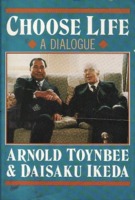
    Thanks to my friend Frantz Rimpel who gave me this book as a gift three years ago, I woke up this morning re-reading “Choose Life, A dialogue” between historian Arnold Toynbee and Buddhist lay organization leader Daisaku Ikeda. This book, published in 1972, is a record of Toynbee & Ikeda’s views on critical issues confronting humanity.

    toyn1The book is divided into 3 main Topics: 1.- Personal and Social Life (the basic human being, the environment, the intellect, health and welfare), 2.- Political and International Life (political system, one world, arms and war), 3.- Philosophical  and Religious Life (The nature of things, religion, good and evil).

    I read this book a couple of years ago. And this morning I rediscover the depth of its content. It’s always a pleasure to revisit and reread my books. I can go over my underlining and notes in the margin to agree once again with the author, and even disagree with myself.

    This is what happened in my skipping though the third chapter entitled : The intellect. It includes their thoughts and viewpoints on education, learning which are in my area of studies being part of a self-directed leadership education program called Life Leadership..

    Education helps the man to “see clearly what he ought to be and how he ought to live”, said Ikeda. And Toynbee to add that “education is a continuing search for an understanding of the meaning and the purpose of life and for discovering the right way to live. 

    “School education is insufficient to the full development and cultivation of individual abilities” Toynbee & Ikeda said, adding  that the kind of education system needed today is one that concentrates on developing the whole human being.

    Intellectuals and the masses

    “Learning today changes so rapidly that often what one learns in school becomes outdated and perhaps useless later on”, they said, arguing that people are more interdependent today and we need to get more involved in community activities to learn from varied life experiences.
    There should be no demarcation line between intellectuals and the masses. “Human beings are human beings before they are members of either the intellectual group or the masses”. But they also agree that “people need time and money in order to obtain the kind of education required for serious intellectual pursuits”.toynbee

    To become an intellectual, three things are required: 1.- Intellectual ability, 2.-The will to work hard at learning, and 3.- money.

    There should be “moral obligations” between an intellectual and his community. The intellectual owes it to society to perform a useful social service and society owes it to the intellectual to remunerate him sufficiently.

    This is what best selling author and founder of the Life Leadership Orrin Woodward called a compensated community. Life Leadership brings leadership education, life skills development to the masses . This lifetime educational system is targeting to reach in the upcoming year one million people globally reading, listening to audios, streaming videos, associating in open meetings, seminars, building and bonding in community learning groups. This is definitely the way toward bridging the gap bettween the intellectuals, content creators, innovators and the masses.

    Toynbee & Ikeda stated in their dialogue that “lifelong part-time education is the surest way of raising the intellectual and moral level of the masses”.

    Both intellectuals and the masses should come together, take our common humanity to set as a goal to promote FREEDOM from fear, JUSTICE for all, access to WEALTH for those who are ready to do the work.We must bring our uniqueness as human being, not as a class, group, tribe, in a concerted effort to improve humanity.

    God bless,

    #RooseveltJeanFrancois

  • Leadership Pope Francis: a plain conflict agaisnt the status quo in the Vatican

    Bestselling author Chris Brady defines leadership as a plain conflict against the status quo. This is  exactly what Pope Francis has been doing for the last three years. And he did it again last Monday of the Vatican bureaucracy.

    popefrancispopefrancis1CNBC reported Francis’ Christmas greeting to the cardinals, bishops and priests who run the Holy See was a sobering catalog of 15 sins of the Curia that Francis said he hoped would be atoned for and cured in the New Year.

    He had some zingers: How the “terrorism of gossip” can “kill the reputation of our colleagues and brothers in cold blood.” How cliques can “enslave their members and become a cancer that threatens the harmony of the body” and eventually kill it by “friendly fire.” About how those living hypocritical double lives are “typical of mediocre and progressive spiritual emptiness that no academic degree can fill.”

    “The Curia is called on to always improve itself and grow in communion, holiness and knowledge to fulfill its mission,” Francis said. “But even it, as any human body, can suffer from ailments, dysfunctions, illness.

    popefrancis2The annual Christmas greeting comes at a tense time for the Curia, the central administration of the Holy See which governs the 1.2-billion strong Catholic Church. Francis and his nine key cardinal advisers are drawing up plans to revamp the whole bureaucratic structure, merging offices to make them more efficient and responsive.

    The Vatican’s finances are also in the midst of an overhaul, with Francis’ finance czar, Cardinal George Pell, imposing new accounting and budget measures on traditionally independent congregations not used to having their books inspected.

    Francis, who is the first Latin American pope and never worked in the Italian-dominated Curia before he was elected, has not shied from complaining about the gossiping, careerism and bureaucratic power intrigues that afflict the Holy See. But as his reform agenda has gathered steam, he seemed even more emboldened to highlight what ails the institution.

    Francis started off his list with the “ailment of feeling immortal, immune or even indispensable.”Then one-by-one he went on: Being vain. Wanting to accumulate things. Having a “hardened heart.” Wooing superiors for personal gain. Having a “funereal face” and being too “rigid, tough and arrogant,” especially toward underlings — a possible reference to the recently relieved Swiss Guard commander said to have been too tough on his recruits for Francis’ tastes.

    CuriaSome critiques could have been seen as worthy of praise: working too hard and planning too much ahead. But even those traits came in for criticism as Francis noted that people who don’t take time off to be with family are overly stressed, and those who plan everything to a “T” don’t allow themselves to be surprised by the “freshness, fantasy and novelty” of the Holy Spirit.

    “How good it is for us to have a healthy sense of humor,” he said.

    At the end of the speech, Francis asked the prelates to pray that the “wounds of the sins that each one of us carries are healed” and that the Church and Curia itself are made healthy.

    Pope Francis is attacking the status quo with grace, and love. This is leadership.

    Read more on this report, tap on CNBC.